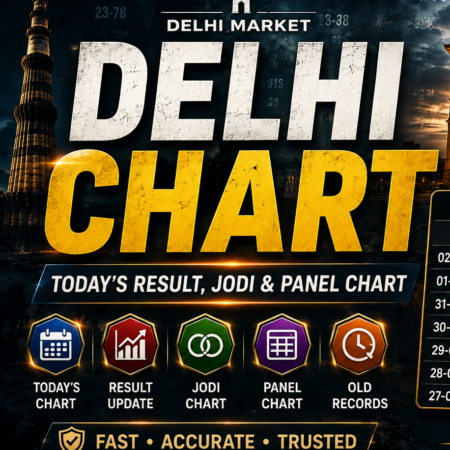

Delhi Chart provides a structured way to view Delhi market information by date and result category. Readers can use the page to understand available Delhi chart today, Delhi chart result, Delhi jodi chart, Delhi panel chart, and Delhi old chart information in one place.
SattaMatkaHub’s Delhi chart page uses a week-wise format to organize available records, with sections related to open, jodi, close, and panel or panna information. The information displayed on the page is intended for informational purposes.
What Is a Delhi Chart?
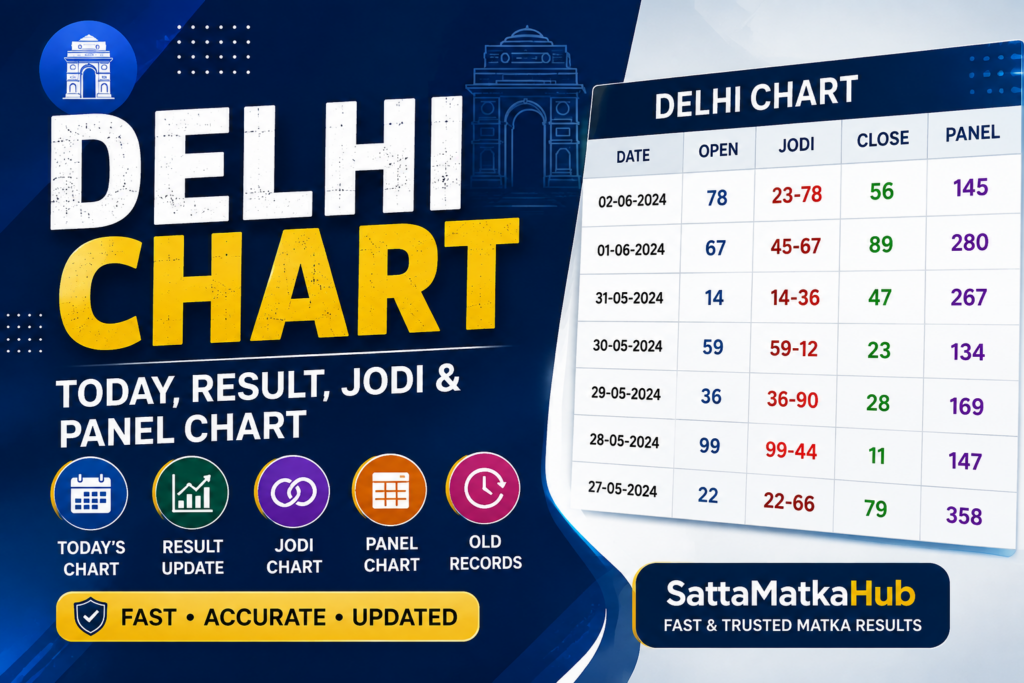
A Delhi chart is a table-based record that organizes Delhi market information according to dates and result categories. Instead of presenting records in a long list, a chart places related information into separate columns, making it easier to read and compare.
Depending on the chart format, you may find details related to open results, jodi, close results, panel, or panna. The exact columns can vary from one website to another.
On SattaMatkaHub, the Delhi page follows a week-wise structure. The layout is designed to organize information across different days and result categories.
Where Can You Find Delhi Chart Today?
If you are searching for Delhi chart today, you are usually looking for the latest information available for the Delhi market. The best approach is to visit the dedicated Delhi chart page and check the latest date and information actually displayed there.
SattaMatkaHub identifies the page as a Delhi Panel Chart and provides a week-wise chart format. If the table does not contain current information, it should not be treated as a published result.
When checking a current Delhi chart, look at:
- The date shown on the page
- Available open information
- Jodi information
- Close information
- Panel or panna information
- The latest available update
An empty table simply means that data is not currently displayed. It should never be replaced with a guessed result.
What Does Delhi Chart Result Mean?
A Delhi chart result refers to Delhi market information presented in an organized chart format. Rather than viewing individual result entries separately, users can find related information grouped according to dates and categories.
For example, a chart may separate open, jodi, and close information into different fields. This makes the page easier to scan and helps readers understand which information belongs to which category.
SattaMatkaHub states that its displayed result information is fetched through an API and stored in its database. The website also presents the information for informational purposes.
Since online chart information can change, always check the date and the source before considering any displayed record.
How Does a Delhi Matka Chart Work?
A Delhi matka chart presents market records in a table so that dates and result categories can be viewed in an organized manner. The main benefit of this format is simple: you can find information without digging through multiple paragraphs or separate result posts.
A Delhi chart may contain terms such as:
| Chart Term | Meaning |
|---|---|
| Open | Opening result entry |
| Jodi | Paired result entry shown in the chart |
| Close | Closing result entry |
| Panel/Panna | Panel-style result information |
| Date | Date associated with the displayed record |
The terminology and table design may differ between websites. For that reason, always read the headings provided on the specific chart page you are using.
What Is a Delhi Satta Chart?
A Delhi satta chart is a search term commonly used for a chart page containing Delhi market records. Someone searching this term may be looking for either current information or previously published records.
A useful chart page should make the following information clear:
- Which market is being shown?
- Which date or period does the chart cover?
- What does each column represent?
SattaMatkaHub’s Delhi page identifies the market and uses a weekly structure for its Panel Chart Record. This organization helps readers understand the type of information displayed on the page.
What Is a Delhi Jodi Chart?
A Delhi jodi chart focuses on the jodi information associated with Delhi market records. It presents paired entries in a structured format, usually alongside dates or other relevant chart fields.
Historical chart formats can be useful when readers want to look at previously published records in an organized way. A table also makes it easier to locate a particular date without scrolling through large blocks of text.
However, historical results should remain historical. Previous records do not guarantee or reliably predict future results.
What Is a Delhi Panel Chart?
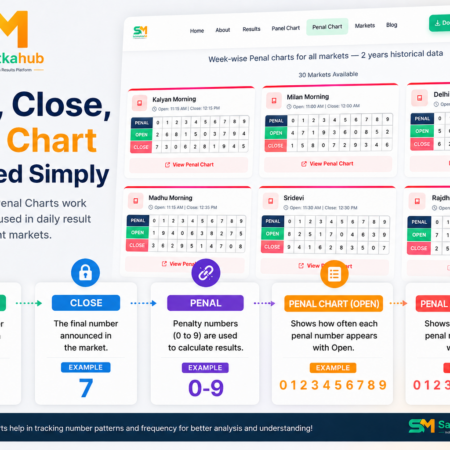
A Delhi panel chart organizes panel-related information for the Delhi market. On SattaMatkaHub, the dedicated page is presented as a Delhi Panel Chart and uses a week-wise panel chart structure.
The chart structure can include fields such as:
- Open
- Jodi
- Close
- Open Panna
- Close Panna
- Cut Jodi
These labels help readers understand how the available information has been divided within the chart. The availability of actual records depends on the data returned to the page.
If no information appears in the table, readers should rely on the displayed status instead of assuming that a result is available.
What Is a Delhi Penal Chart?
A Delhi penal chart generally refers to a chart containing penal or panna-style information connected with the Delhi market.
Different websites may use terms such as panel, penal, or panna in slightly different ways. Therefore, the safest approach is to follow the terminology used by the individual website.
On SattaMatkaHub’s Delhi page, the chart structure uses the term “Panel Chart” and includes Open Panna and Close Panna fields.
For readers, clear explanations are more useful than repeating the same keyword again and again. SEO works better when the page actually answers the searcher’s question.
Can You Check Delhi Old Chart Records?
Yes, a Delhi old chart can be useful for viewing previously published Delhi market records when historical information is available.
Old chart records are mainly useful for checking earlier dates and understanding how results were organized at a particular time. They should not be confused with current updates.
When reviewing an old Delhi chart, check:
- The exact date
- Whether the record is complete
- The source of the information
- Whether the information has been updated
- Whether the record is clearly identified as historical
Historical records should be treated as records of the past, not as a reliable method for predicting future outcomes.
Delhi Chart vs Jodi Chart vs Panel Chart
Although these terms are closely related, each one can refer to a different part or format of chart information.
| Chart Type | Main Focus | Typical Information |
|---|---|---|
| Delhi Chart | Overall Delhi market record | Dates and result categories |
| Delhi Jodi Chart | Jodi information | Jodi entries by date |
| Delhi Panel Chart | Panel or panna information | Panel-related entries |
| Delhi Penal Chart | Penal/panna-style records | Penal or panna entries |
| Delhi Old Chart | Historical information | Previous dates and records |
The terminology can vary across websites, so always check the labels on the specific page you are reading.
How Should You Read a Delhi Chart?
Reading a Delhi chart is straightforward when you first identify the date and then follow the column headings. The key is to understand what each field represents before comparing records.
Step 1: Check the Date
Start by identifying the date or day shown in the chart. This helps prevent information from different periods from being mixed together.
Step 2: Understand the Columns
Look for labels such as open, jodi, close, panel, or panna. Each column serves a different purpose within the chart.
Step 3: Review Published Records
If you are checking historical information, compare the records that are actually displayed. Do not turn apparent patterns into claims about future results.
Step 4: Check the Source and Update
Online charts may rely on external data feeds or database updates. SattaMatkaHub states that its displayed information is fetched through an API and stored in its database.
Step 5: Use the Information Responsibly
SattaMatkaHub presents its chart information as informational content and includes an 18+ and responsible-play notice.
Why Do People Search for Delhi Chart Today and Old Chart?
Delhi chart today and Delhi old chart usually serve two different search purposes.
Someone searching for today’s chart generally wants the latest available information. Someone searching for an old chart is looking for historical records.
Keeping current and historical information clearly separated makes a chart page easier to navigate. It also reduces confusion about whether a displayed entry is new or from an earlier date.
A record from last week should look like a historical record—not today’s update.
Frequently Asked Questions About Delhi Chart
What is a Delhi chart?
A Delhi chart is a structured table used to organize Delhi market information by date and result category. Depending on the website, it may contain open, jodi, close, panel, or panna-related information.
Where can I find Delhi chart today?
You can visit a dedicated Delhi chart page and check the latest information actually displayed there. SattaMatkaHub provides a week-wise Delhi panel chart format, although current data availability can vary.
What is the difference between Delhi jodi chart and Delhi panel chart?
A Delhi jodi chart focuses on jodi-related entries, while a Delhi panel chart focuses on panel or panna-related information. Both can form part of a broader Delhi chart.
What is a Delhi old chart?
A Delhi old chart is a historical chart containing previously published Delhi market information. It can help users review earlier dates and records.
Can a Delhi old chart predict future results?
No. Historical chart records do not guarantee future results. Previous entries should be viewed as historical information rather than certainty about what will happen next.
Practical Takeaway
When using a Delhi chart, first check the date, then review the available result fields and confirm whether the information is current or historical.
For current searches, Delhi chart today is the relevant intent. For historical research, terms such as Delhi old chart, Delhi jodi chart, and Delhi panel chart are more appropriate.
Most importantly, treat a chart as a record of published information—not a crystal ball. If data is missing, leave it missing rather than filling the gap with assumptions.